




【欣建築】金點設計-萬燈喜月
2015.09.14
- 加入收藏
- 分享


文章來源:欣建築;圖文提供/台灣創意設計中心
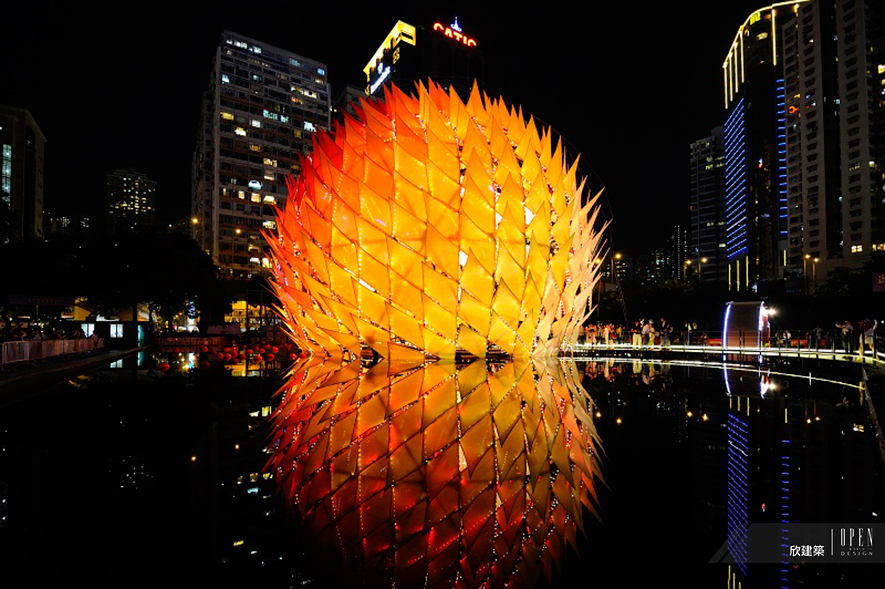
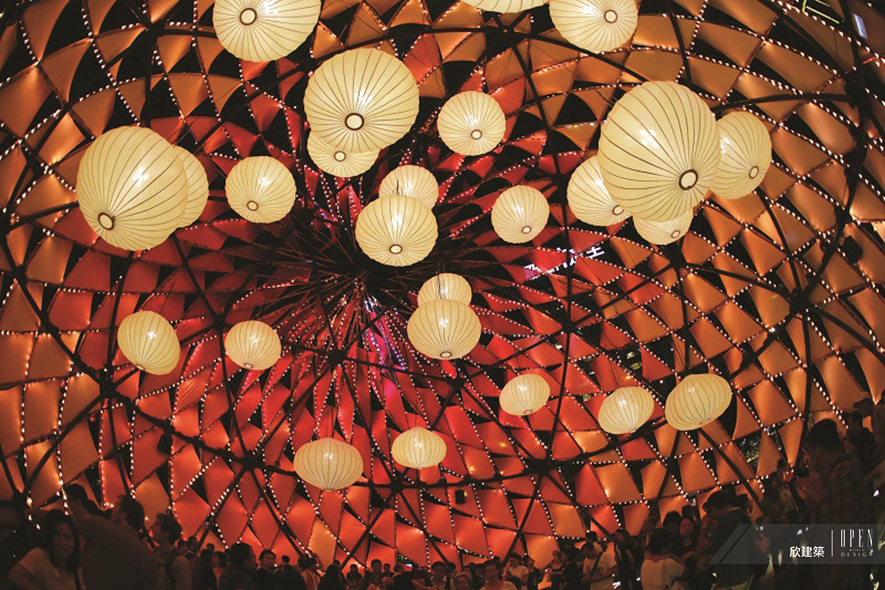
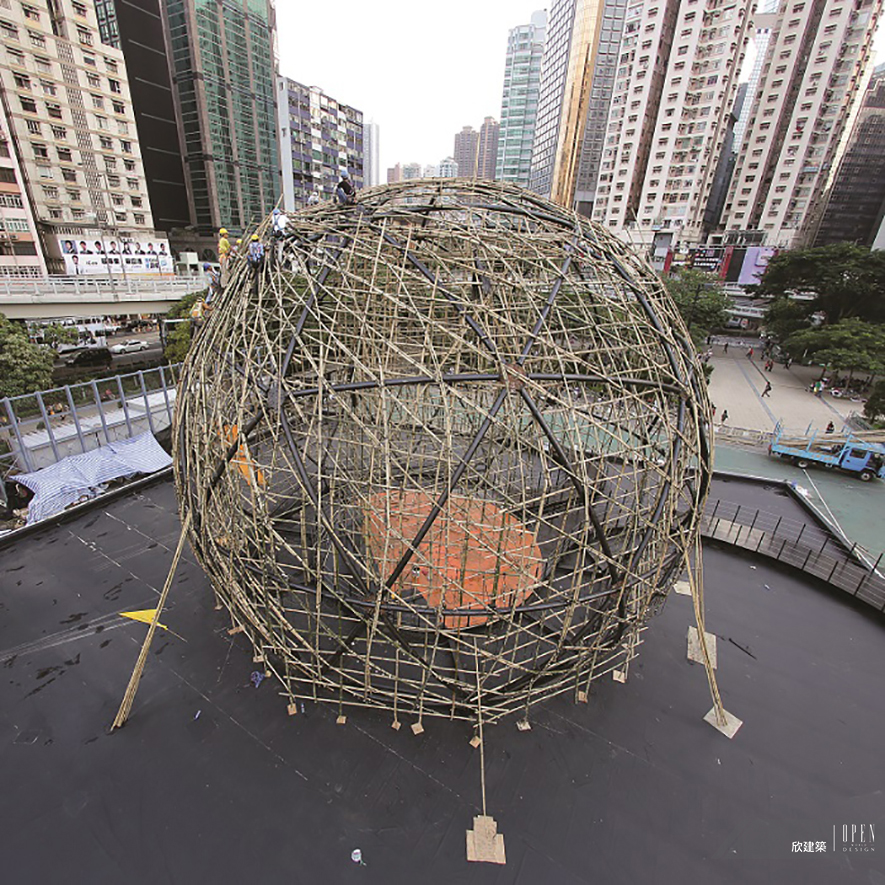
傳統製造燈籠的材料,如竹枝,鐵線,織布,都被想像並轉化為建築物大小的比例。“萬燈喜月”的基礎是鋼材所組成的圓拱形結構。利用資料化設計的方法可以建立一個包圍著它的格網,而這第二層的格網結構就是由竹所組成的。香港建築業的搭棚工藝技術正可在此發揮其長處,快速的手藝加上技師現場的判斷,正是為香港築起了不少摩天大樓。這種憑技師感覺和手藝的建造方法,與電腦資料化座標格網的建立,兩者看似矛盾,但卻共存於這專案當中。然後,織布會被拉張並伸展,安放在格網適當的位置並加上LED燈。
“萬燈喜月”僅僅用了十一天的建構時間,它並體現了資料化設計與工藝的融合。在為期六天的展期中,入場人次超過四十萬。參觀的大眾可以與這一個擁有動態空間,色彩和光影變化的結構進行感觀上的互動。
The Golden Moon is a temporary architectural structure that explores how Hong Kong’s unique building traditions and craftsmanship can be combined with contemporary design techniques in the creation of a highly expressive and captivating public event space. It is the winning entry for the Lantern Wonderland design competition organised by the Hong Kong Tourism Board for the Mid-Autumn Festival and was on display for 6 days in Hong Kong’s Victoria Park. The Golden Moon revisits the concept of a Chinese lantern and makes a direct link to the Mid-Autumn Festival legend of Moon Goddess Chang’e who can only meet her husband Houyi on the night of the Mid-Autumn Festival, when the moon is at its fullest and most beautiful. To symbolise the passionate love burning between them, the 6-storey-high, spherical moon lantern is clad with abstracted flames in fiery colours and patterns.
Traditional materials for making lanterns, such as translucent fabric, metal wire and bamboo, have been translated to a large scale. A light-weight steel geodesic dome forms the pavilion’s primary structure and is the basis for a computer-generated grid wrapped around it. This grid is materialised through a secondary structure from bamboo. For this, Hong Kong’s traditional bamboo scaffolding techniques were used – a high-speed, instinctive way of building scaffoldings for e.g. the city’s many skyscrapers. This highly intuitive and imprecise craft was merged with exact digital design technology to accurately install and bend the bamboo sticks into a grid wrapping the steel dome. This grid was then clad with stretch fabric flames, all lit up by animated LED lights. All materials were recycled upon demolition.
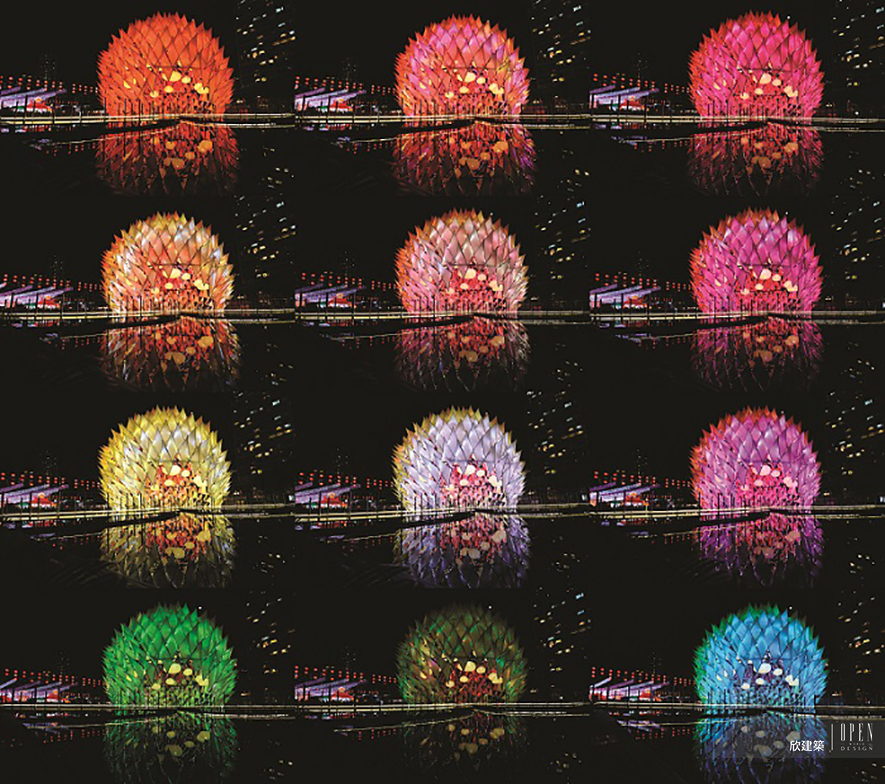
The Golden Moon builds up on research into “building simplexity”, the building of complexity from the simplest of means. Procedural modelling techniques were used to control the production of the unique geometry: a sphere that is wrapped with a diagrid according to a Fibonacci sequence that produces order along the equator and randomness at the poles. Code was used for the production of simple drawings that would allow the labour force to mark up intersections between the steel structure and bamboo easily. Optimisation scripts were finally used to reduce the amount of unique stretch-fabric “flames” from 470 different units to 10 different types that could stretch and adapt to the various conditions in which they were applied.
Built in only 11 days, the Golden Moon shows how, through a combination of state-of-the-art digital design technology and traditional hand craftsmanship, complex geometry can be built at high speed and low cost. The project rethinks the premise of digital design by anchoring the paradigm in a strong materiality. With over 400,000 visitors during its 6-day lifespan, the pavilion used its dynamic space, structure, colour, texture and light to trigger a sensuous response from its visitors.






 動能開啟傳媒有限公司版權所有 COPYRIGHT © OPEN WORLD DESIGN ASSOCIATION RESERVED.